Friday, May 27, 2011

Kafe An Nasuha Beverages

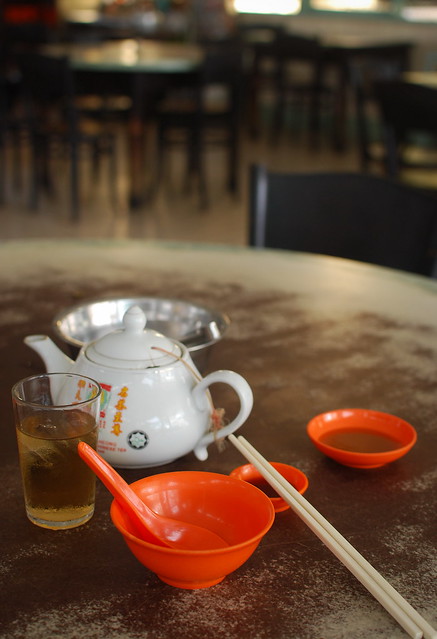
The Masjid India vicinity is especially stark and quiet pass the midnight hour. It’s the absolute contrast to the thriving, colourful daytime when mercantile activities are in full swing. I felt like an abductee, blindfold removed as I was led to a strip of old shoplots along Lorong Bunus 1, after crossing a few dark lanes. Here, it was bright and lively. Who would have thought? A few Mamak (Indian-Muslim) restaurants were hiving, particularly one with stools and tables spilt to the adjacent units. That’s where we ate.

We found a communal table and shared it with a few others that seemed hurried. It’s not strange, but a courteous act as they observed the influx that increased by the minute. Naturally, we followed suit.

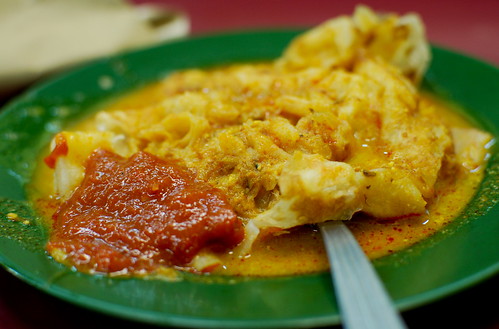
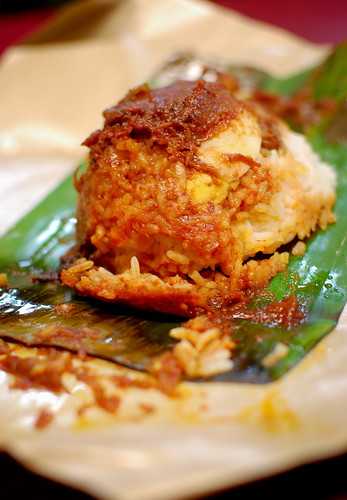
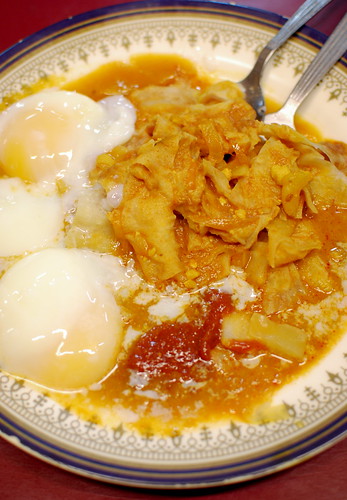
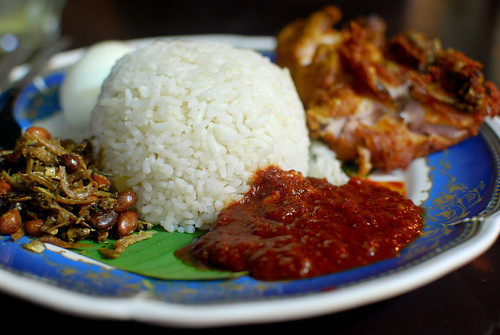
There’s no need for any recommendation when every table is piled with the same servings of roti banjir spesial and pre-packed pyramidal nasi lemak.

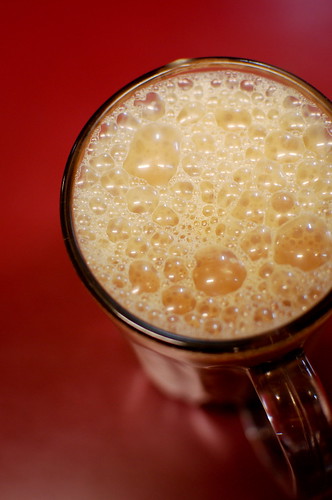
One can probably find similar, rather mechanical food at any Mamak stall across the city but sipping teh halia or masala tea and downing chunks of fried bread drenched in dhal curry with sambal and runny eggs by the Klang River in a historical quarter...now that's something special. And that's why we keep coming back to An Nasuha.

Friday, May 20, 2011

Fine Palate Café (and the Singapore Art Museum)

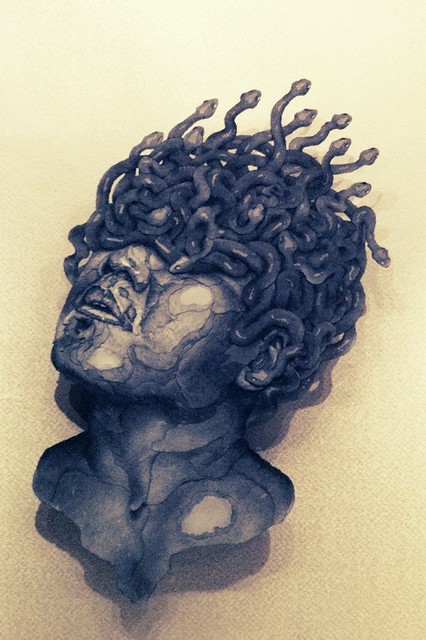
Part of Quiet Rooms (2009), an installation of charcoal drawings on paper collage by Malaysian artist Nadiah Bamadhaj.

Art is something that strikes me as beautiful. Like the ceiling of the Sistine Chapel. But modern art, to me, is rather a case of nebulosity. During my travels to some of the major cities in the world, I try to fulfill my obligation as a (shamelessly) savvy tourist by visiting some of their infamous, quintessential modern art galleries/museums. From the video of a progressively rotting plate of fruits at the Tate Modern to the haunting, ghostly images and installations at the Guggenheim, the artistes’ expressions have exponentially expanded my conservative outlook of the arts itself. I begin to question the complexity of modern thinking and if that does us more good than bad. And like it or not, I often leave these places feeling more confused, but relieved. Does that make any sense at all?

I might not have understood or appreciated some of the exhibits at the Singapore Art Museum (SAM) but solely for showcasing contemporary pieces of some of the renowned artistes in this region, its effort should be applauded. Also, the architecture and facilities are, in my opinion, of world-class standard.

Truth be told, it was neither the love of art nor the Biennale hype that brought us here. SAM was a side trip after a visit to the nearby Fine Palate Café.

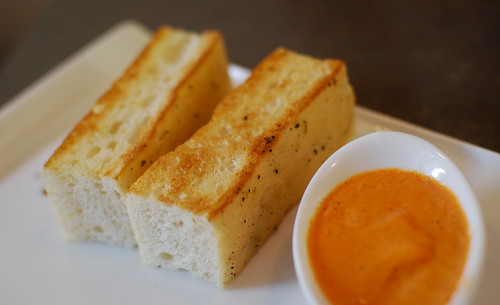
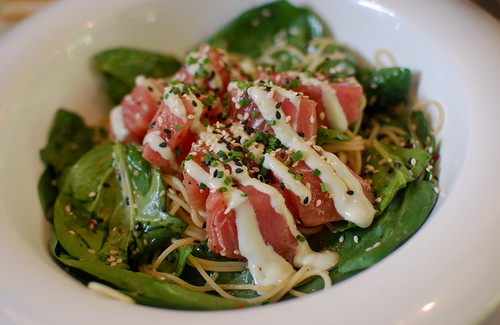
It’s really rare of us to brunch at cafés, mainly because of the expected typical offerings - toasts, bacon, poached eggs, pancakes, etc. But there were some interesting dishes on the menu that caught our attention - sesame buckwheat noodles and tuna with capellini. The buckwheat noodles (soba), with its natural tinge of salt, were dressed with an aromatic goma (sesame) oil. A curl of the soba with the seared, crunchy prawn (although I do question the size of the described “tiger prawn”) was simplistically a delight. I also enjoyed the tuna with capellini very much. The tuna chunks were succulent and fresh while the mixture of shoyu and mayonnaise was tasty without being confusing. Unlike some of the art pieces. I should also mention the complimentary fluffy, toasted bread and slightly tangy dip that I assume to consist mainly of tomatoes and bell peppers.

The arts didn’t just end at SAM. At the nearby SAM at 8Q, in conjunction with the Singapore Biennale 2011 Open House campaign, a few more exhibitions were offered to the public for free that day. At the mini theatre, an independent film was being shown. It was about death. By then, I knew I had enough for the day and dragged myself out to the adjacent lounge where a few modern chairs were placed. It was cool and quiet. I found myself the most comfortable spot and napped.


Singapore Art Museum
71 Bras Basah Road
Singapore 189555
Tel: (+65) 6332 3222

Fine Palate Café
51 Waterloo Street
#01-04/05 Singapore 187969
Tel: (+65) 6336 5120

Thursday, May 12, 2011

Indomee Burger @ Bestari

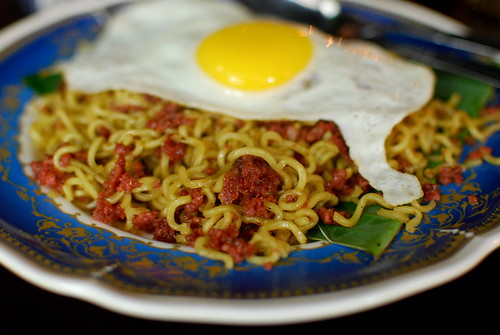
A few years back, when a good friend said that Bestari's where the best Indomee Goreng can be found, I was intrigued. How much more can one do with a simple pack of dry-tossed instant mee (noodle)? As I'd suspected, they'd merely added minced beef and a sunny side up. But this Indomee Goreng, they call it Indomee Burger, was tasty. When you have all the seasonings from the sachets and beef patty, it has to be. Bestari, like many nasi kandar chains conglomerating the city, offers an extensive menu that's beyond common culinary vocabulary. For example, what the heck is Mee Kahwin? I'd discovered later that it's a combination of mee rebus and Mamak-style rojak. However, another friend said that it's nothing more than a mixture or bee hoon (rice vermicelli) and egg noodles. I’d yet to give it a try.

My friends really, really enjoy the Indomee Burger here. They like it so much to declare this the best version of Indomee Goreng in the world. And just like that, we’ve been hanging out here for the longest time. At this branch in Desa Hartamas, we’d shared many interesting, ambitious conversations and recovered from extreme inebriation with the cups of hot kopi O and teh halia (ginger tea). For me, it’s more of the company than anything else.

We’ve been taking a hiatus from Bestari to make way for exams, business trips and conferences. Yes, the more important but less fun things in life. So, when we met up here two weeks ago, you can imagine how long we’d actually stayed to catch up on one another. They had their favourite Indomee Burger (of course), while I had myself some hot beverages to take away the tipsiness from consuming way too much wine at a fantastic party that took place just a few hours earlier.

We must have stayed until 2 in the morning that day before deciding to drive around KL to enjoy the vibrancy of the city’s nightlife. A few hours later, I was on my way back to Singapore, bringing with me a weekend that many would call wasted, unconstructive and unhealthy. Well, I had fun.

Sunday, April 17, 2011

Magma

If not for the picture of a purple potato mash that got my previous TimeOutSingapore (and Istanbul) donor salivating, I wouldn’t have paid much attention to Magma, a German bistro located at Bukit Pasoh. Not that German cuisine is uncreative or boring, of course. Or that German restaurants are now as populous and common as their French counterparts. My first Deutsche meal was certainly exhilarating. The selection of beers, pork knuckles, sausages (lots of them!) and sauerkraut – they were all I dreamtsch about for awhile. A few Oktoberfests later, I was no longer the curious, excited virgin I used to be. I’m sure it’s just me settling with equivalents (well, sort of) that I feel resonate best with my tastebuds; like a pint of Guinness, siow bak (Chinese roast pork belly), lap cheong (Chinese waxed sausages) and kimchi. Magma was my first proper German meal since my birthday a few years back, if I correctly recall. And it was a good one, no doubt.

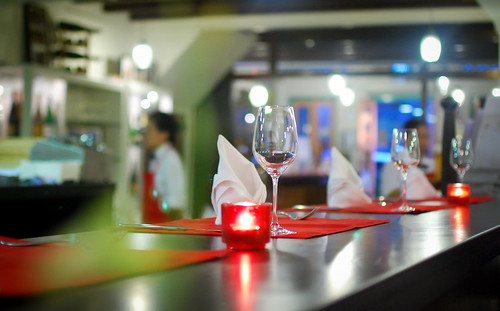
You'd think that business was brisk on a Saturday evening, since it's good. Throughout the night, only 5 tables were occupied. We're not complaining, for the ambiance was excellent; a relieving contrast to the chaotic, congested restaurants in town. This called for a celebration. We had a bottle of sparkling "Secco Festival" Riesling with a touch of peach that came at just S$33. For that pleasant price and taste, it made us really happy. I should thank the attentive and cheerful staff (and The Local Nose) for the recommendation.

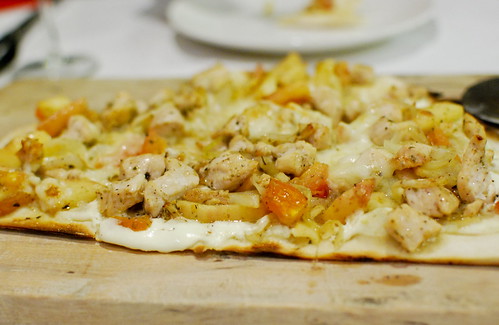
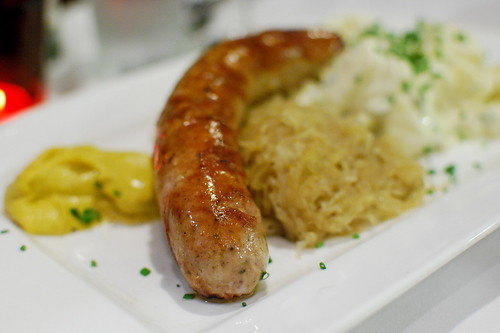
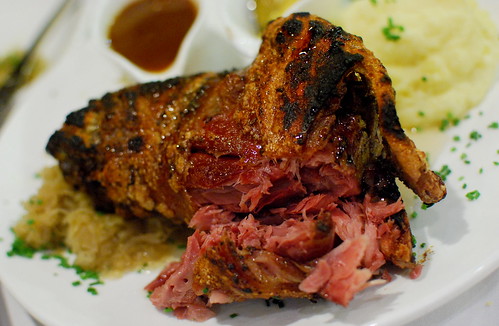
As for the dishes, I can't decide if I liked the flammkuchen or the pork knuckle more. The thin, crispy flatbread with a sour cream base (appetizing!) and sprinkled generously with apples, onions, tomatoes, chicken and cheese was a plethora of textures and tastes. Perhaps it's a norm in some regions to combine apples and onions in their recipes, but it did seem strange to me, initially. Now, I think this combination works deliciously well. To add apples to curries, burgers and stir-fries...now that's an idea! The pork knuckle was exemplary, I thought. A bite unravelled 3 distinctive layers that blended perfectly right - savoury, pink, flaky meat beneath golden, crackling roasted skin glazed with honey. Condiments like beer gravy and German mustard provided an extra kick to the meat.

In the midst of such pleasures, the purple potato mash had completely slipped off our minds. That's okay. The dinner itself was a privilege, for not only was the food good and relatively affordable, we'd also enjoyed a really rare, serene weekend dinner with affordable bubbly and wonderful smiles. We must have done something right to deserve this.

Magma
2-4 Bukit Pasoh Road
Singapore 089816
Tel: (+65) 6221 0634
Website: http://www.magmatc.com/

Wednesday, April 6, 2011

Hokkien Mee Me!

Back in the 80s, there was a TV commercial selling cornflakes that I thought was misleading. Well, to me, at least. It started off by comparing a young kid’s reaction to two types of breakfast. On the right (yes, I even remember the layout!), he had a bowl of cornflakes and looked really happy. On the left, he was served some dark, fried noodles that resembled very much like Hokkien Mee. And guess what, he looked terribly disappointed. Every time that commercial was aired, I’d say (to the TV screen), ARE YOU KIDDING ME??? I’m not against those tiny golden crisps fortified with dozens of nutrients but if the marketer decides to force supremacy against Hokkien Mee (or any stir-fried noodle, for that matter), it gets personal.
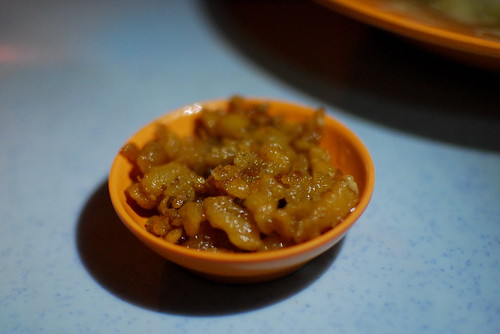
My affection towards this calorific, deathly dish is obvious, if you’d read my previous Hokkien Mee posts. Time and again, I'd mentioned that in the last decade or so, I’d never been wholeheartedly satisfied, even with some of the more established stalls in KL/Selangor. I was told that perhaps my ideal Hokkien Mee had never existed, that it’s all in an idea of perfection that I’m indulging. Definitely not. I remember how it tasted back in the older days – a savoury stock and slightly sweet dark soy sauce reduction done to a sticky consistency, coating every strand of thick egg noodle, sprinkled with the quintessential dried, pounded flounder, glistened and aromatized with a layer of hot lard oil. Sometimes, there's the additional fried shallot oil too. Let’s not forget a sharp, pungent cili boh/belacan dip that cuts through the sweet/savoury reduction, adding a new dimension to already exciting taste. Jaded that I am, with my ceasing torch, I continue to find that taste, good taste, long lost.
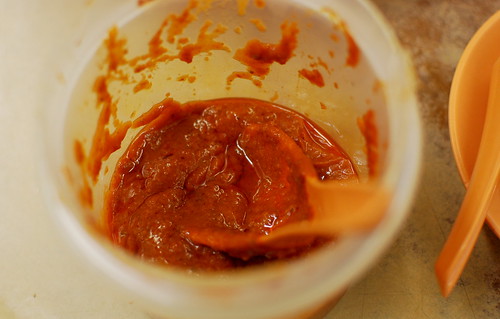
On an accidental night after a light shower, a few of us old kids decided to finally visit the two infamous Hokkien Mee stalls, located at the opposing ends of a stretch along Jalan 222, Section 14 in Petaling Jaya. Both were equipped with fast-paced and knowledgeable, mostly foreign staff. Ahwa’s version had a matte finish – an emphasis on dark soy sauce that ensued a sweeter aftertaste. What lacked, I thought, was the compulsory aroma (wok hei) of hot lard oil. Hence the missing shine as well. Peng Yuan, on the other hand, was glossy and aromatic. The sauce was less reduced and leaned towards the savoury side. Despite the loose consistency of the sauce, as a fan of all things savoury, I’d personally liked Peng Yuan’s more.
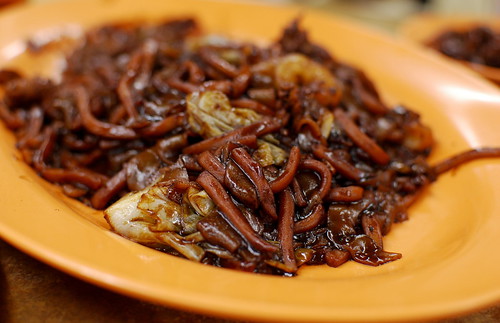
Ahwa's Hokkien Mee
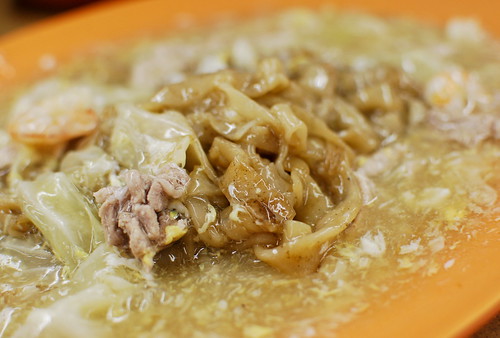
Ahwa's What-Darn-Whore

So far in this blog, I’ve rambled too much about Hokkien Mee but not so on the other definitive Chinese noodle dish, Cantonese-style. I must say that I’m a big fan of its more popular variant - the (90% phonetically correct) what-darn-whore or thick rice flour noodles (whore fun) topped with an egg-starch sauce. The browning of whore fun is important to provide wok hei and separate the stacked strands. Ahwa did a good job at that. Their assembly with a smooth, sufficiently gelatinous egg-starch topping sealed the deal for me. I would have been more enthusiastic about Peng Yuan’s version if not for finding a broken toothpick (let’s hope it was unused) in the sauce.
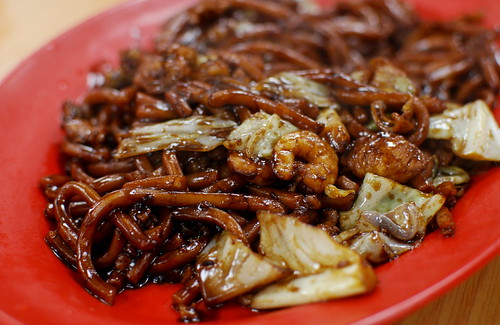
Peng Yuan's Hokkien Mee
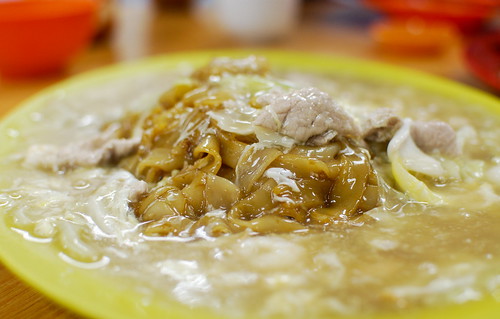
Peng Yuan's What-Darn-Whore

On a different occasion, the old kids decided to explore Sunway Giza on a Saturday night. The main complex didn’t excite us much but the young and fashionable seem to enjoy thronging here on weekends. Nearby, at an extended shoplot, we found a branch of yet another infamous Hokkien Mee institution, Restoran Damansara. This one offers a menu and additional fried lard bits. Perhaps due to an overwhelming amount of oil insulating the sauce and noodles, it turned out rather bland. But the shine and colour did look sinfully appetizing though. The Cantonese version fared better with a crispy web of fried rice vermicelli (bee hoon) and whore fun soaked in a subtlely flavoured egg sauce.
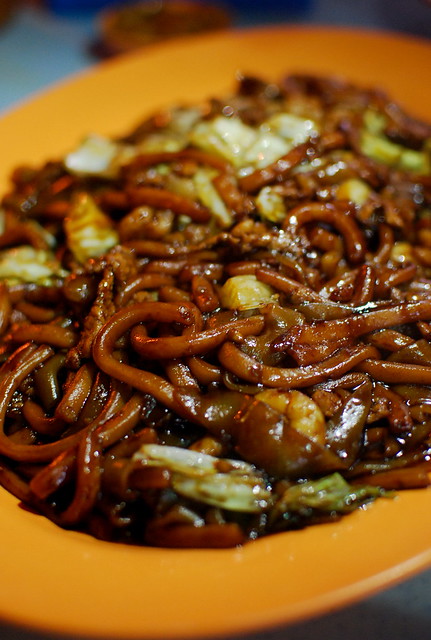
Restoran Damansara's Hokkien Mee
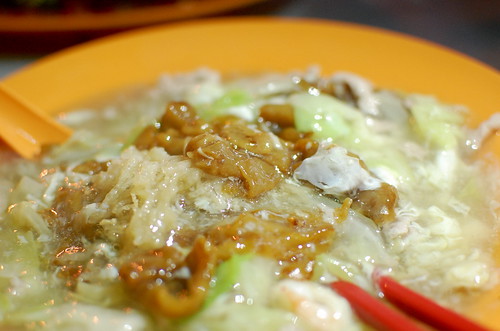
Restoran Damansara's Cantonese Stir-Fried Ying Yang Noodles

There are a few Hokkien Mee stalls left on our list but to be honest, I’m not too optimistic looking at the names. One of which I had frequented some years ago, way before they decided to go big with mediocre and expensive Hokkien Mee. I’d never been back since. Although the long lost taste may not be found in the near future (not never, hopefully), every outing with the old kids was fun, as we reminisced the days of being wild, young and free. Now, I wonder if they remember the cornflake commercial.


Restoran Ahwa and Peng Yuan Hokkien Mee
off Jalan 222 Petaling Jaya
Selangor, Malaysia

Restoran Damansara Hokkien Mee
35, Jalan PJU 5/9 Kota Damansara
Selangor, Malaysia

Thursday, March 31, 2011

Goto

A nap spanning 13 train stops later, I was ready for some serious kaiseki. I managed to avoid the rush hour and even arrived earlier than expected. As I alighted at the Chinatown station, I reached for my workbag's side pocket. The iPhone was gone.

Firstly, let me just say that I should have expected this day to come. I mean, losing the iPhone, not the 9-course, S$180++ per pax kaiseki dinner. Who in the right frame of mind carries his/her iPhone in those loosely netted pockets, all exposed, screaming take me, stranger, take me! the fool won't notice a bit! The truth was, I did that for the sake of convenience and health. Another theory suggested that the phone fell off my bag while I napped. Clever, but waking up with my bag positioned on my lap just the way it was before I fell asleep, there was no way that my bag be subjected to any form of motion causing my iPhone to drop from the pocket. Regardless, I take the blame for my loss. I was just thankful that it was not my wallet that had gone missing.

We almost cancelled the dinner at Goto. Immediately, I used XLB's BlackBerry to call up the service provider and got my line barred. After reporting the loss at both SMRT and SBS control stations at Dhoby Ghaut (I didn't realise that the North East line is managed by SBS, not SMRT), I got my SIM card replaced at Plaza Singapura...after a long wait. In front of me was this deranged distressed woman complaining about her allegedly faulty TV box. She seemed keen on getting a replacement set (and some freebies), killing the service staff AND burning down the whole unit. Tough luck. All she got was a card of the department's manager. That much I understood. I was given a new SIM card within minutes and we had about 20 minutes left to go to Goto (cheap pun intended).

Goto was dim, contemporary zen. It calmed us down a bit. The very hospitable hostess and her staff, all in kimonos, put us at ease. It was disheartening each time the hostess described a mouth-watering course as I thought of my iPhone, now being violated by a stranger. That bastard had better be gentle with my iPhone. I wonder if he'd managed to break my lock code. *Sniggers*

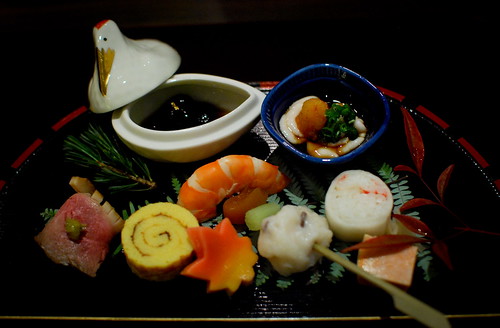
The first course was visually stunning, almost confusing. I couldn't catch half of the ingredients but the highlights were definitely the gold-leavened sweetened black beans, shirako in ponzu shoyu, roast duck slice and fishball. Not any ordinary surimi fishball, of course. It was made of fugu.

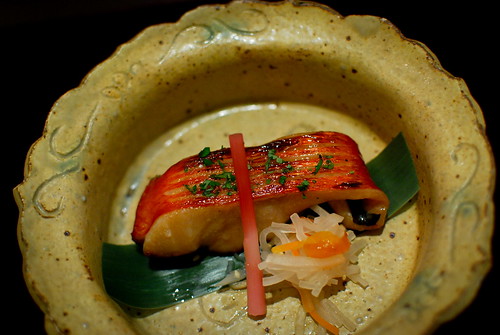
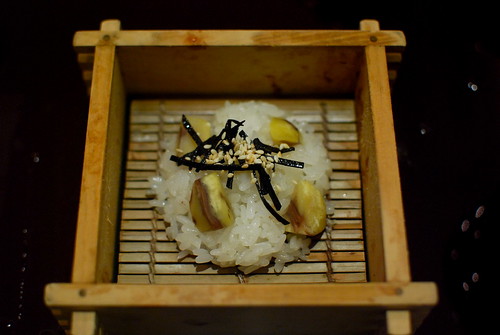
The simple course of red snapper, skin scored and glazed sweet, was very much appealing to the senses. Cooked just right, the flesh was moist, pairing the sticky, slightly savoury glaze really well. If this was offered in an a la carte menu, I would have had this with some of the steamed chestnut rice - one of the dishes served towards the end.

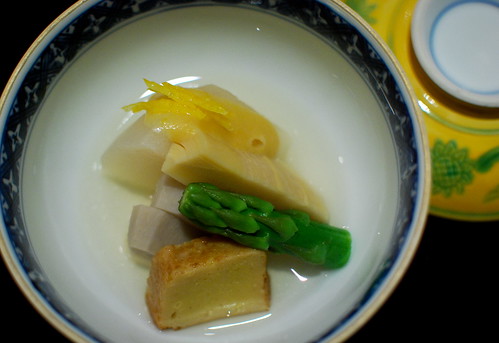
When served with a covered regal yellow bowl, engraved with classic Chinese/Japanese motifs, I'd expected some exotic, expensive ingredients...like sea cucumber. Instead, the bowl was filled with steamed vegetables - yam, daikon, bamboo shoot and asparagus. I was slightly disappointed with the ingredients but they were nicely arranged though. The vegetables came with a creamy karashi. Instead of providing a sharp taste to the mustard sauce for contrast, it was surprisingly mild. And blended in finely with the vegetables. A subtle, interesting combination that even a spice fan like me appreciated.

Tempuras never excite me as much as KFC's Hot 'n Spicy. Goto's version didn't change my mind but I must say that the chef should be praised for his creative selection of ingredients. There was no use of panko - the prawn was coated with crispy rice balls instead. There was also a tiny fried sandwich of fishcake slices and sweet plum marmalade. For best effect, we wetted the pieces with a squeeze of lemon before dipping them into some refined salt. You can imagine that combustion of flavours in the mouth, I'm sure.

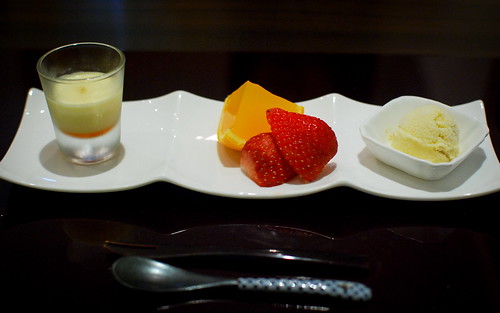
There were 2 desserts - one was a trio of ice cream, jelly and fruits, and the other was a warabimochi. Of all the desserts, the quartered orange jelly was the most intriguing with the jelly replacing the orange's flesh. It could fool anyone into believing that it was a normal cut of orange from afar.

As per tradition, we were presented with whisked, frothy warm matcha to end the kaiseki dinner. Secretly, I was hoping that they would prepare the matcha in front of us. Some sort of after-meal performance, like a mini tea ceremony, I thought. I can only dream.

I'd lived without an iPhone for the whole of January. It was a time for reflection, on the need for excessive social networking, Apps downloading and Youtubing. Yes, all the things that make life busier - but for what? That month, I'd read a couple of books, enjoyed more real conversations with friends and was not at all distracted by WIFI spots.

By chance, I got hold of an iPhone 4 by February. These days, I keep it in my pants' pocket, no matter how the waveforms will have (allegedly) detrimental effect on male fertility. And I'm still reading. But of course, when I have to choose between a politician's biography and StreetFighter IV (I got it for only US$0.99 from the AppsStore!), the choice is almosthadokenalwaysshoryukenobvious. Such is life.

Goto
14 Ang Siang Road
#01-01 Singapore
Tel: (+65) 6438 1553

Thursday, March 3, 2011

Green Valley Vegetarian Restaurant

There seemed to be a lot to choose from, including chicken rice. Wait a minute, isn’t this a vegetarian restaurant? But I was here mainly for the thunder rice, so it really didn’t matter. I can’t remember the last time I stepped into a Chinese vegetarian restaurant. It must have been decades ago, when I was first introduced to faux meat made of wheat gluten. My interest lasted only a couple of meals, mainly affected by the overwhelming use of artificial flavourings and oil. Of course, I'm still speaking in the context of Chinese vegetarian cuisine.

Over the years, my circle of friends extended. One of the ways to know them better is to understand their diets. I’m usually piqued by the vegetarians, especially when there’s a story involved. Some refrain from meat for health reasons but most regard it as part of their religion. One that I know did it out of love and respect for his religious wife. I do have many questions on this practice, from both mythical and scientific perspectives, but I must agree that underlying the different beliefs is the fact that this diet is essentially a healthy way of life.

Green Valley was quiet that Saturday. Not surprising as it was way past lunch time. This choice of lunch venue was late and most arbitral. But a good one, no doubt. Coming into a vegetarian restaurant with a stomach full of pork (from breakfast), I did feel slightly sinful, so we had another fibrous, green dish, in hope of minimizing the guilt. Joking lah.

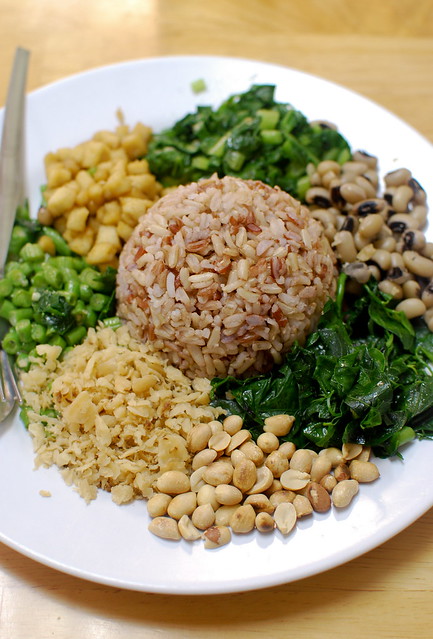
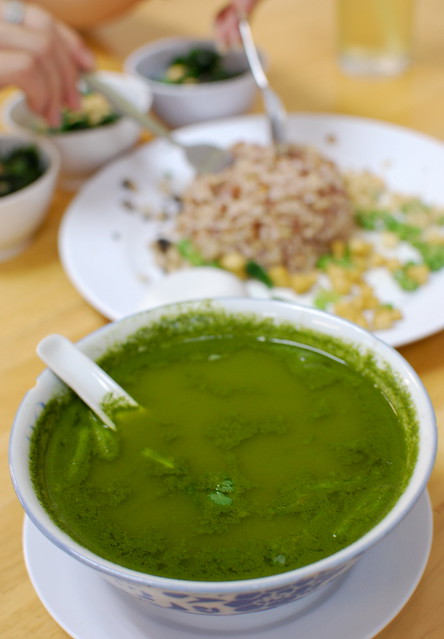
The thunder tea and rice - instantly noticeable was the missing component of anchovies, but with a good variety of vegetables, black-eyed peas (that's new), tofu cubes and peanuts thrown in, I was not missing much. As for the green (literally) tea, all I can say is, thank goodness! It was what I expected - a healthy blend of basil/coriander/pepper/mint/etc paste thinned in hot water. Now, I'm not sure if anyone noticed but more and more thunder tea sellers are substituting plain hot water with superior stocks. Sure, it makes the tea umami but that's just wrong. Not authentic. It's not fusion but funny. A farce, even. I shudder at the thought of my past superior stock-thunder tea experiences at some major foodcourts in Singapore. And another stall in Senai, Johor. So, in conclusion, I really enjoyed Green Valley's thunder tea for being as original as I remembered, sans meat.

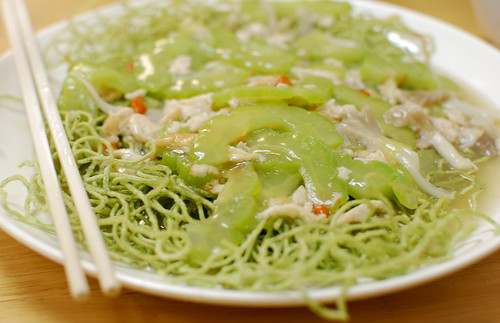
I'm not sure if one of my favourite colours has influenced my decision on the fried spinach noodles with a lightly starched bittergourd, wolfberries and oyster mushroom topping, but it sure was a good choice. Simple, healthy, tasty and affordable, the dish basically left no room for critiques.

Looking at the tedious preparation, amount of ingredients used, its acquired taste and selling price, I am in view that thunder tea is not a lucrative business. That makes me appreciate the dish and the sellers even more, especially when it's good. So, the faux meats may not guarantee my return to Green Valley, but the thunder tea definitely will.

Green Valley Vegetarian Restaurant
84-1, 2 ¼ Miles
Jalan Sungai Besi
57100 Kuala Lumpur
Malaysia
Monday, February 21, 2011

Linda's Home Kitchen

I've heard of Area 51 but not the Tianluokeng tulou cluster. It's a shame, really. The former being absolutely geographically unrelated to my origin while the latter represents a cultural heritage of a Chinese clan that I belong to. Partially, to be exact, as I'm also half Cantonese. I'd survived from being a completely lost half Hakka by my fundamental knowledge of Hakka food, thanks to a maternal family that requires, among other delicacies, char zhu yuk (fried pork braised with fermented red beancurd and earwood fungus) and radish/dried oyster soup on those significant Chinese celebrations.
At the table, as we gazed at the beautiful photograph of the tulou cluster hung near the entrance, Sook told Ivan and I about her previous visit there. To be honest, that was the first time I'd ever heard of this extraordinary settlement. The photogragh showed houses with terracotta roofs joined to form a circular enclosure. They were behemoth. That's when UFOs, Area 51 and unexplained crop circles came to mind. It was definitely a good conversation piece.

The food at Linda's reminded me of the Hakka dishes that my mother would make daily - simple, delicious stir-fries using preserved ingredients like dace and vegetables. Of course, here, these dishes are given a more refined and visually-appetizing interpretation, without compromising, by my own standard, the taste and authenticity.

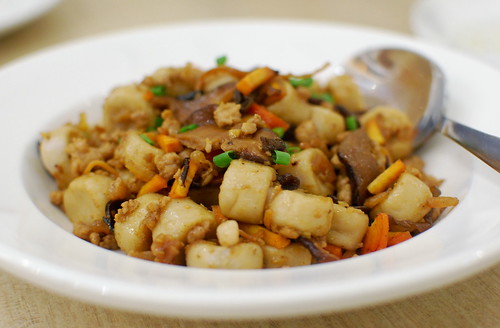
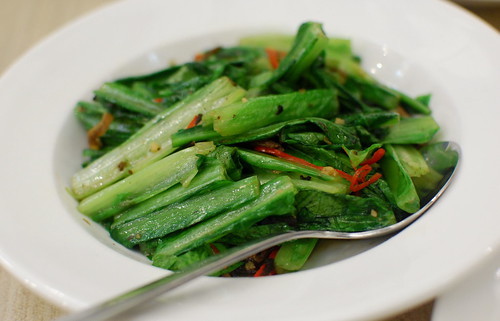
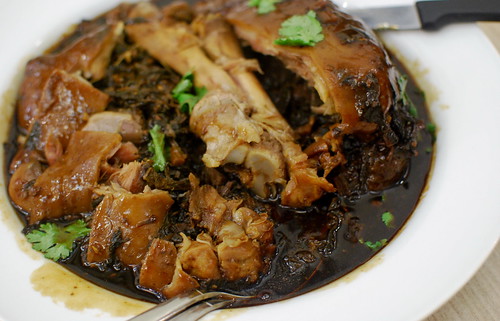
To replace the usual fu yu or fermented beancurd with dace to pair the romaine lettuce was nostalgic. And tasty. This, to go with just a bowl of plain congee would have been great as well. The preserved vegetables we get these days are salty, just. I miss the slightly sweet type, which really adds a flavourful dimension to the dish. Sourced from China, that's the type that Linda's using for the stewed pork trotter. Good stuff! I shouldn't forget the flaky pork trotter with the collagen dissolving into a gelatinous sauce, which goes to show how well-cooked the trotter was. Interestingly, I've never been familiar with the yam gnoochi (or abacus), despite it being a Hakka signature. Perhaps I was more of a turnip/shitake mushroom dumpling kind of Hakka. Linda's version, I have to say, was special. Instead of bandwagoning the typical springy texture, it came soft, almost melting. A classy act that didn't come too oily but equally aromatic and flavourful. There was also a sambal bee hoon presented with a layer of burnt crispy contrast to the smooth, soft strands of the right choice of rice vermicelli. Seriously, you'll be surprised to know that there are many out there misusing the different types of bee hoon. Oh, I should also mention the velvety serving of almond pudding to end the meal.

This was supposedly a planned Korean dinner but I'm sure glad we headed here instead. I'd learned quite a bit that evening, including the names of some infamous Australian restaurants from the company of wonderful food enthusiasts, that there is a cosy restaurant in town that's passionate about Hakka food and the Tianluokeng tulous.

Hakka cuisine is not as celebrated as its Cantonse and Hokkien counterparts. The truth is, there is much more than thunder tea, yong tau fu and salt. And you'll see it in Linda's menu.

Linda's Home Kitchen
206, Telok Ayer Street
Singapore 068641
Tel: (+65) 6284 7272

Friday, February 11, 2011

Lunch at Sek Yuen

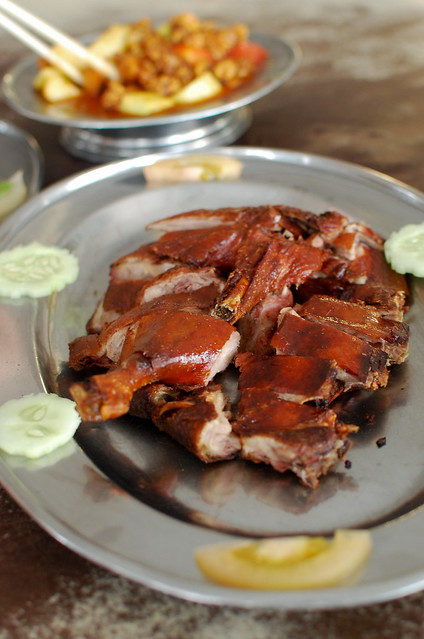
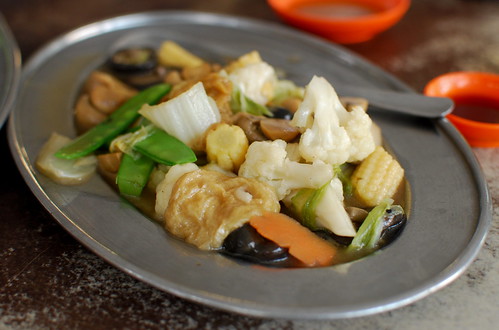
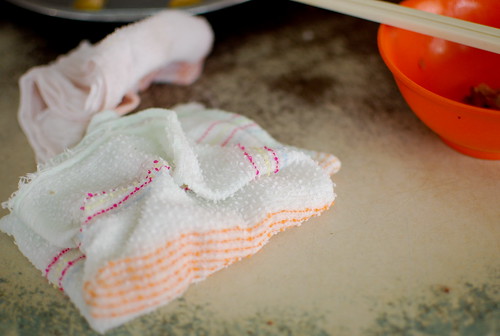
The aluminium plates were each a piece of art, characteristically malled by the years they'd served. So impressive as well were the steaming hot rolls of colourful towels offered to the customers at the end of the meal. The cheerful and attentive hosts, especially the uncle in a Hawaiian shirt with loud hibiscus print, looked like they enjoyed their roles very much. A rarity these days, don't you think? In the background, Christmas songs sung in Mandarin where played. All these, and the food, made my first Sek Yuen experience on Christmas day a most satisfying one.

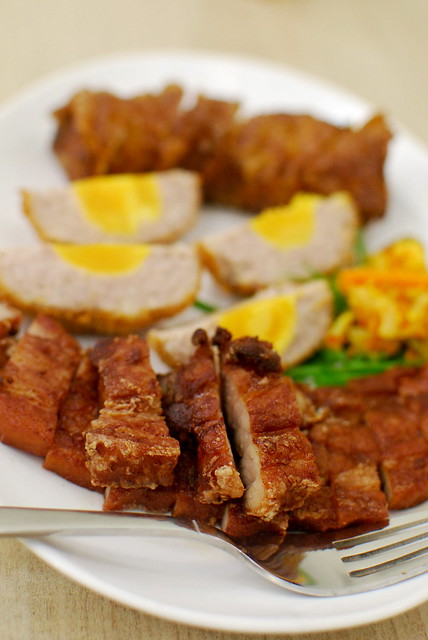
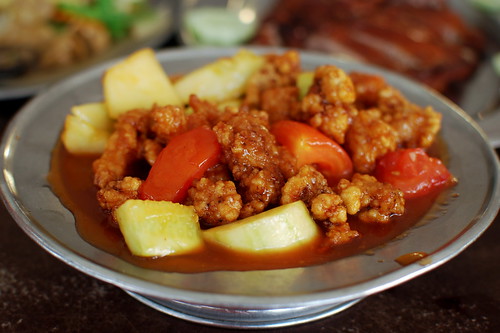
Dad recounted his few banquet attendances here some 30 years ago and praised their signature creations, including the chilled bowl of meat and jelly. Some of these dishes are long lost, he said. According to dad, the sweet and sour pork here is an all-time favourite. I must agree. Everyone can make sweet and sour pork, of course. But to take it beyond a high school science project of combining plain bottled ketchup and deep-fried pork requires some techniques. Or what we Cantonese call kung fu. At first glance, the blistering nuggets appeared to be the result of deep-frying in overheated oil, which usually causes the meat to be undercooked. Not at all, thankfully. In fact, each piece was cooked tender, pink to the core. Kung fu! Coat the crunchy golden fried batter with a balanced sauce of syrup, tomatoes and starch, and it's a colourful and appetizing dish.

I reported my menu to dad after that lunch and he seemed pleased that I had the pei pa duck, which was air-dried then deep-fried and yet, came just minimally greasy. This is a dish that has been with the restaurant for the longest time and it's really not difficult to understand its longevity. Addiction was that crack of the crispy skin followed by the taste of well-salted, succulent meat. If I'd proceeded with my plan for a bottle of affordable bubbly, nothing too fancy and difficult to pronounce, for this occasion, it would have paired this duck nicely, I'm sure.

My folks have been telling me that Sek Yuen is exemplary of classic Cantonese fare. But what is classic? I'm not sure if my limited knowledge and young tastebuds, furthermore marred by all these new fusion/confusion cuisines, grant me the ability to recognize such complexities - a skill that comes only with age and a long love for food. But I do know that good taste is always here to stay. And that's how I'll remember Sek Yuen.

Monday, January 31, 2011

The Last Kathmandu Post: Colourful Nepali Cuisine

A main course at Thamel House Restaurant

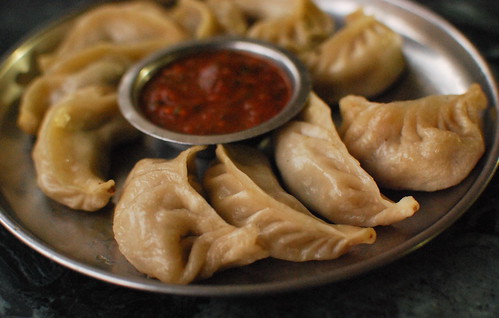
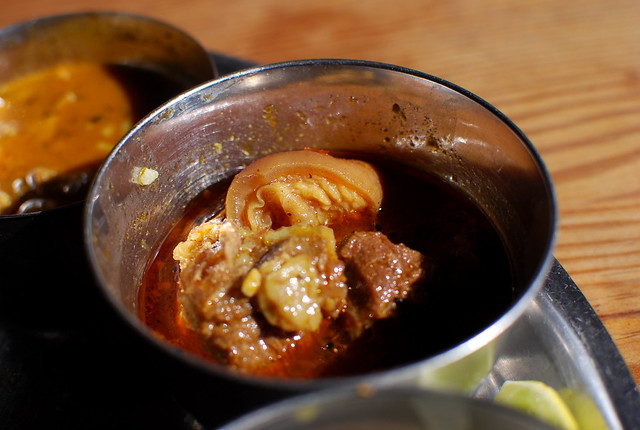
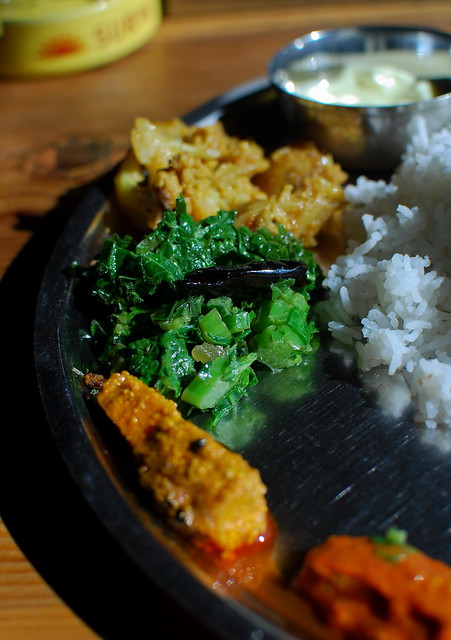
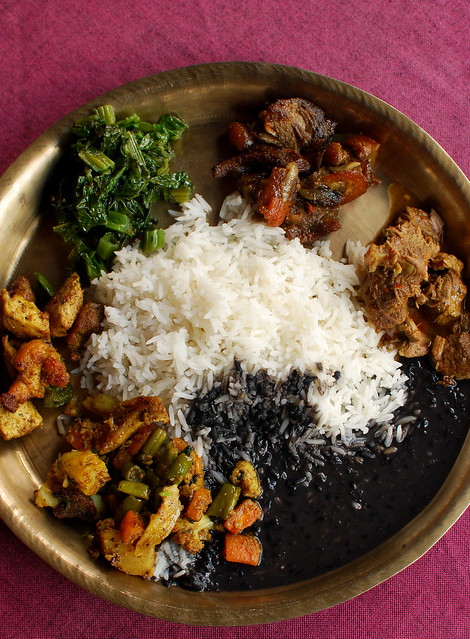
Every Nepali meal that I had was a feast of colours and flavours. The fact that these restaurants are frequented by mostly locals made each experience even more interesting. Thakali Kitchen is a no-frills restaurant that serves affordable staples like daal bhaat and momo. It was here that I had my first Nepali dinner and a surprisingly good chilli relish to go with the steamed momos. Unlike Thakali, Thamel House Restaurant is grand, complete with a stage in the courtyard, which provides entertainment to the evening crowd, I think. I had the full-course lunch here and it was amazing. I love the rich Kalo Daal (lentil cooked in iron pot with heated purified butter and herbs). Just that and some sada bhuja (boiled basmati rice) will do for me. With side dishes like Khasi Ko Ledo (stewed mutton), Bandhel Tareko (boiled and sauteed wild boar with gelatinous layers of skin!) and Khukura ko Sekuwa (skewered, grilled chicken over charcoal) kept pouring into my large bronze plate, it was definitely worth the slightly more expensive pricetag. Oh, not forgetting the warm dessert of Shikarni (whipped yoghurt with nuts and cinnamon powder). Lunching at the family-run Mustang Thakal was an intimate affair. The kitchen was bustling, helmed by an old lady. I had the Mustang Thakali Chulo Special, which came with rice, daal bhaat, saag (boiled, sauteed mustard greens) and stewed pork, complete with cuts of the knuckle. The smiling staff made sure that everyone was well-fed and kept refilling the empty plates. Two full servings later, I had to decline a third. It was a challenge walking back to the hotel after that.

Fantastic chilli relish for the momos at Thakali Kitchen.

Tender pieces of stewed pork at Mustang Thakal.

Saag - mustard green appearing in every Nepali meal.

----------

This is my last post on Kathmandu. It feels like I've not said enough about my short stay in this colourful city. There's still a story about a patriotic taxi driver, the impossible untangling of traffic congestion come the peak hours, getting lost in the maze of lanes and of course, food tales. But there's only so much that I can fit into January. Hopefully I'll do a better job the next time, when I visit the sacred lake of Gosainkund.

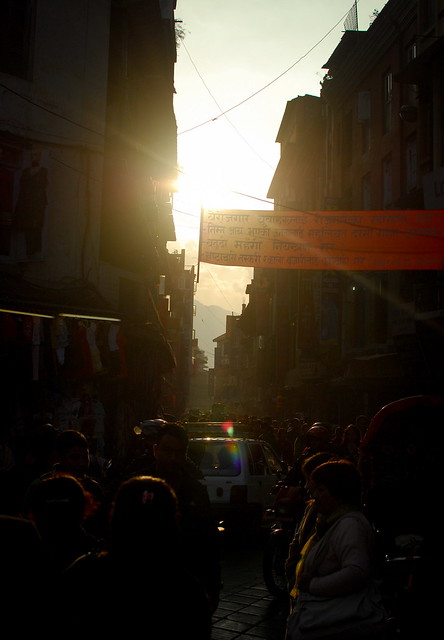
The sun sets in Thamel, Kathmandu.